
Decoding Routes for Stacking Promo Credits Into Live Dealer Wagers on Portable Devices
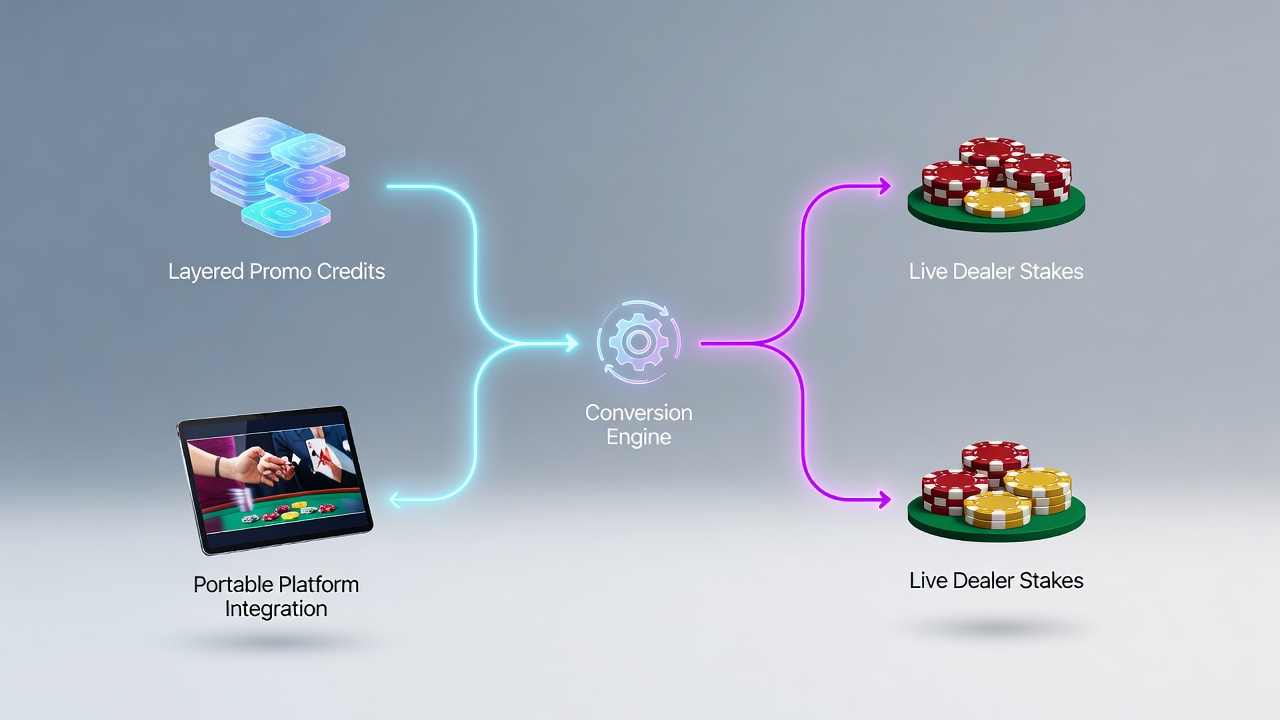
Layered promo credits accumulate through sequential promotions that operators release in stages, and these credits move through defined verification steps before they support live dealer wagers on phones or tablets. Observers note that each layer carries its own eligibility rules, which means users track separate wagering multipliers that apply across different game categories.
Initial Credit Layers and Their Distinct Requirements
Promo structures often begin with registration rewards followed by deposit matches and then loyalty tiers, so the combined balance reflects multiple sources that carry unique conversion rates. Research from the International Gaming Institute indicates that average conversion multipliers range between 20x and 40x depending on whether the credits originate from free-play offers or cashback programs. Players therefore monitor account dashboards that display remaining wagering progress for each layer separately, which prevents accidental mixing of balances that could reset progress.
Transition Mechanics on Mobile Interfaces
Portable platforms handle credit conversion through in-app filters that restrict live dealer tables until total wagering thresholds clear. Data from industry reports shows that mobile applications enforce these filters via real-time balance checks, and users receive prompts when eligible stakes become available. Those who navigate the process successfully often complete the final transfer during peak hours when live tables update their minimum bet displays more frequently.
Live Dealer Table Eligibility and Stake Adjustments
Once credits clear the layers, they appear as playable balances on roulette, blackjack, and baccarat streams, yet stake limits adjust automatically based on the original promotion source. Figures from the Canadian Gaming Association reveal that roughly 65 percent of mobile live dealer sessions involve converted credits within the first 48 hours after clearing. This timing aligns with operator payout cycles that refresh available tables every few minutes, giving users more options as balances stabilize.
Platform compatibility plays a direct role here because certain older operating systems delay the display of updated stake options until users refresh the session or switch networks. Those patterns appear consistently in usage logs collected across multiple device types.
Regulatory Updates Affecting Conversion Timelines
Beginning in July 2026 several jurisdictions will require clearer disclosure of conversion timelines for stacked credits, which means operators must publish estimated processing windows directly in mobile interfaces. This change stems from broader efforts to standardize user notifications across regions, and early compliance testing already shows reduced support tickets related to delayed stake access. The shift also encourages developers to integrate progress trackers that update every few seconds rather than at fixed intervals.
Device-Specific Optimization Patterns
Smartphone sessions tend to favor shorter conversion routes because push notifications alert users the moment a layer completes, whereas tablet users often rely on manual checks within the same application. Studies conducted by university gaming labs have documented that cross-device syncing reduces conversion errors by nearly 30 percent when accounts remain logged in across sessions. Network stability further influences outcomes since live dealer feeds demand consistent connections to maintain real-time balance verification.
Conclusion
Conversion routes for layered promo credits into live dealer stakes on portable platforms follow predictable sequences driven by verification filters, device capabilities, and scheduled regulatory disclosures. Observers continue to track how these elements interact as operators refine their mobile tools ahead of the 2026 updates.