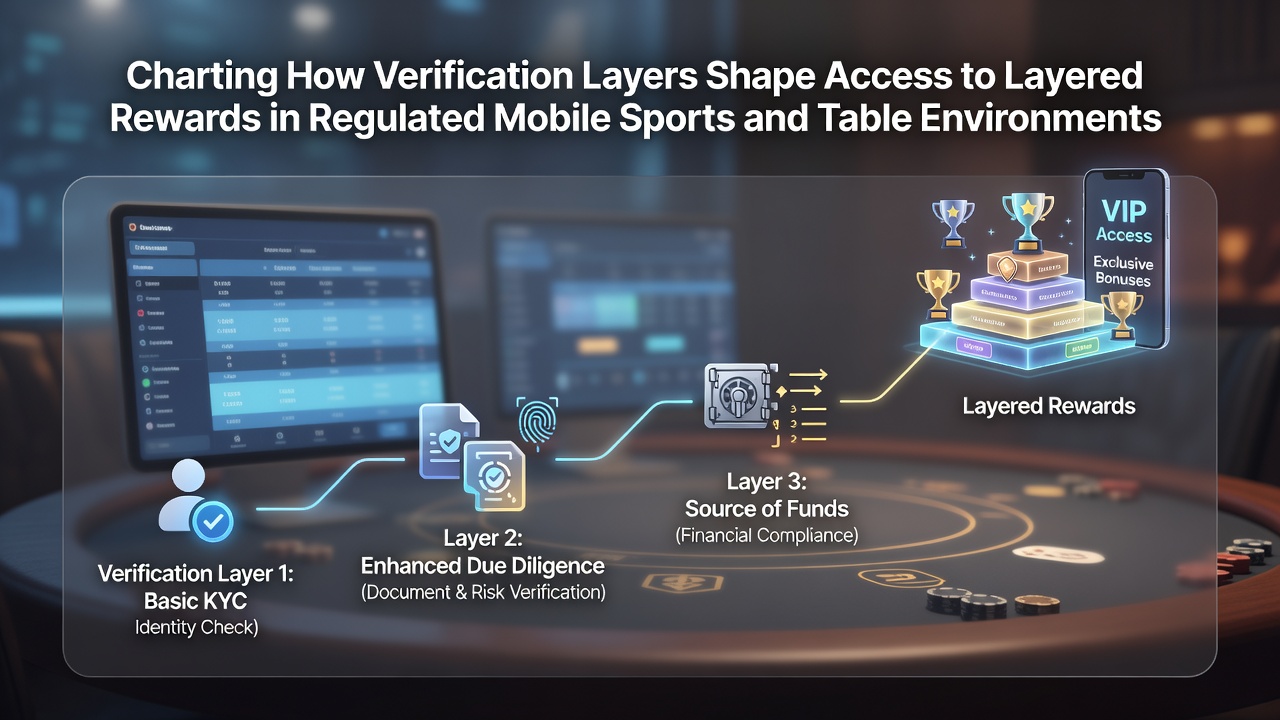
Charting How Verification Layers Shape Access to Layered Rewards in Regulated Mobile Sports and Table Environments
Verification layers in regulated mobile sports and table environments function as sequential checkpoints that confirm user identity, location, and eligibility before unlocking access to layered rewards such as deposit matches, free spins, cashback tiers, and VIP progressions. These systems integrate biometric scans, document uploads, and real-time geolocation checks to comply with jurisdictional rules across multiple regions.
Core Components of Verification Layers
Regulators in places like Ontario through the Alcohol and Gaming Commission of Ontario and in Nevada via the Gaming Control Board require operators to deploy multi-stage verification that separates basic account creation from full reward eligibility. Initial layers often handle age and identity through government ID uploads, while subsequent stages incorporate address verification and source-of-funds checks that directly gate higher-value bonuses.
Data from the Alcohol and Gaming Commission of Ontario shows that accounts completing all verification stages gain access to promotional structures unavailable to partially verified users, including stacked rewards that combine sports event boosts with table game cashback percentages.
Access Patterns in Mobile Sports Environments
Mobile sports platforms apply verification progressively so that users can place basic wagers after initial checks but must complete additional layers to claim layered rewards such as odds boosts or parlay insurance. In August 2026 several North American and Australian jurisdictions aligned their mobile frameworks to require enhanced location verification for reward redemption, which ties directly to cross-border compliance standards.
Those who study these systems note that incomplete verification blocks progression through reward tiers, forcing users to restart the process when switching devices or networks. This creates measurable delays in accessing no-deposit style incentives and high-roller cashback structures that depend on continuous verified status.
Table Game Environments and Layered Reward Gating
Regulated mobile table environments apply similar layered verification yet add session-based checks that monitor play patterns before releasing progressive rewards like loyalty points convertible to table credits. Operators must log verification timestamps against reward claims to satisfy audit trails demanded by bodies including state-level gaming commissions in the United States and provincial authorities in Canada.
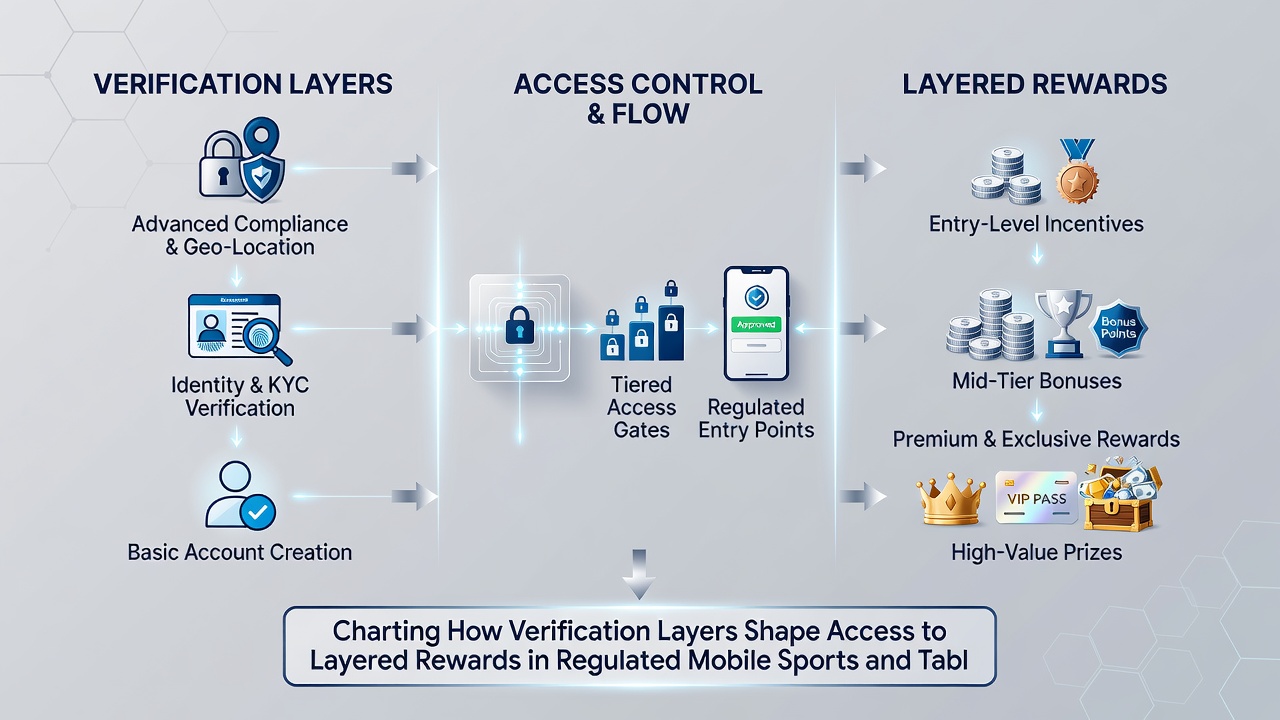
Research conducted by the University of Nevada Reno gaming studies program indicates that players who maintain uninterrupted verification status across multiple sessions achieve faster advancement through VIP reward ladders compared with those who encounter re-verification triggers. The data reveals correlations between verification completion speed and the frequency of reward redemptions in both sports and table categories.
Regulatory Alignment Across Jurisdictions
Frameworks in Australia through the Australian Communications and Media Authority and in select European markets emphasize that verification layers must remain consistent across mobile sports and table products to prevent reward circumvention. Updates rolled out around August 2026 introduced mandatory periodic re-verification intervals that reset reward eligibility timers if users fail to respond within set windows.
Industry reports compiled by the American Gaming Association highlight how these aligned requirements reduce instances of reward stacking abuse while preserving legitimate access paths for verified users who navigate the layers correctly. Operators that streamline the process through integrated app features report higher completion rates for full reward tier access.
Conclusion
Verification layers continue to define the boundary between basic mobile access and full participation in layered reward systems within regulated sports and table environments. Jurisdictions that maintain consistent standards across regions demonstrate clearer pathways for users who complete each stage, resulting in measurable differences in reward availability and redemption timelines. Ongoing alignment efforts scheduled through late 2026 aim to further standardize these processes without introducing new barriers for compliant participants.